Saturday, December 26, 2009

2010 Ford GT90 Super Sport Car Concept going to auction

2010 Ford GT90 Super Sport Car Concept

If Ford first introduced the GT90 Concept at the 2010 Detroit Auto Show next month, it would still be one of the most eyecatching cars on the show floor. What's amazing is that Ford unveiled the GT40 successor nearly 15 years ago. What's more, even by today's standards it's still a supercar among supercars.
The quad-turbocharged 6.0-litre V12 puts out an estimated 720 horsepower, the body is constructed completely of carbon fiber and top speed is somewhere in the 400 kph range. The only hints that it's not a modern supercar are the all-blue interior and wheels that look dated now.
So what's all the fuss about the GT90 Concept now? RM Auctions in the States has just announced that it will be offering the concept car at its upcoming Arizona sale. That's right, this is your chance to own one of the coolest concept vehicles of all time. This is the first time that the GT90 Concept has ever been publicly for sale at auction, and RM claims that it is in "excellent running condition, having been properly stored and maintained over the year." No estimated on price is given, but we're guessing it will take a large suitcase of cash to take the car home.
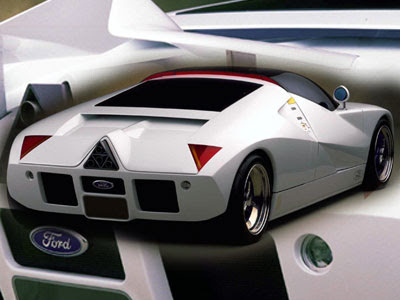
2010 Ford GT90 Super Sport Car Concept

The one-off GT90 Concept Car, labeled immediately as "the world's mightiest supercar" by Ford Motor Company on December 6, 1994, was the spiritual successor to the Ford GT40, the product of a colossal feud in the early 1960s between the Blue Oval from Dearborn and the Prancing Horse of Northern Italy. The GT90 draws from the design cues of its heritage and pays homage to the famed Le Mans-winning Ford GT40s of the 1960s, which were created after the failed attempt by Ford to buy out Ferrari.
At a development cost in the neighborhood of $3 million, the GT90 was certainly worthy of pulling styling cues from the original Ford GTs, and although it was never meant for production, it was built according to a Ford press release as a "test bed for technology, engineering and design concepts, and driver-oriented features that eventually may be used in Ford production vehicles."
Officially unveiled to the public in January 1995 at the Detroit Auto Show, the GT90 is finished in bright white with a bright blue and carbon fiber interior. It features a mid engine quad-turbocharged V12 that produces an estimated 720 horsepower and 660 pound-feet of torque. As a result, it had a claimed top speed of 253 mph, which even by today's standards would make it one of the fastest production cars in the world – faster even than a McLaren F1, which was widely considered the world's preeminent supercar at the time.
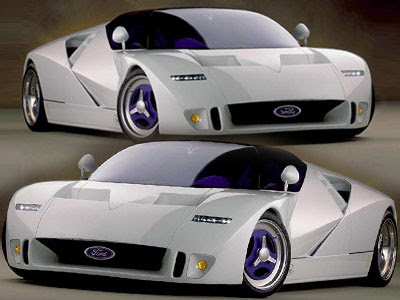
2010 Ford GT90 Super Sport Car Concept

The engine, which was a 48-valve six-liter V12, had to be combined together with four Garrett Systems T2 turbochargers in order to reach its estimated 720 horsepower and was based on the Ford Modular engine. Created by using parts of two Lincoln V8 engines, engineers removed the last pair of cylinders from the rear of one engine and the first pair of cylinders from the front of the other engine. The cut-down engines were then welded together with the final result being a 90-degree V12, which utilized a 90.2 mm bore and a 77.3 mm stroke to achieve maximum power.
The GT90 features the FFD-Ricardo five-speed manual gearbox found on the XJ220 and, considering the torque load that it is designed to handle, is noted as having a relatively light shift quality. Also borrowed from the XJ220 comes the all around double wishbone suspension that was designed to enable the car to handle well at top speeds.
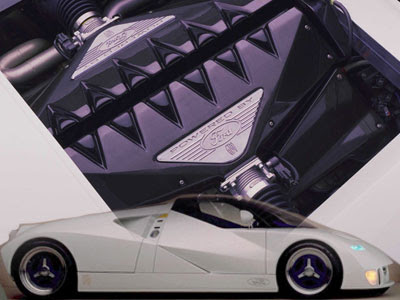
2010 Ford GT90 Super Sport Car Concept

Using Ford's new "Edge" design philosophy, the car incorporated advanced technology with a mixture of flat planes, angles, glass and triangular shapes that seemingly all collided together. The GT90 was the first car created using this new styling directive from Ford, which went on to be responsible for the creation of other Ford products like the Ka and Cougar. The effect is most impressive and a wonderfully executed stylistic throwback to its GT40 predecessor, which at once stays true to its heritage but acknowledges the advances in modern design. Taken directly from race car technology, the GT90 body panels are molded out of carbon fiber while the chassis is formed out of a honey-comb sectioned aluminum monocoque.
The GT90 is a test bed of advanced technology and design. It sports a tinted, laminated glass bubble over the cockpit and a spoiler that rises off the rear deck at high speeds. According to Ford, it has a "design that tightly enclosed its mechanicals with no wasted space; high tech lighting and blind-spot detection systems; and tiles like those on the space shuttle to shield the V12's exhaust outlets."
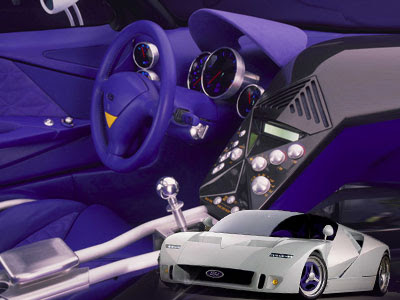
2010 Ford GT90 Super Sport Car Concept

After its unveiling in Detroit, the GT90 made its rounds on the Auto Show Circuit in 1995, traveling around the world to Frankfurt and as far away as Tokyo. With few other showings in between, the car recently was shipped over to Europe to be on display in the Ford of Europe 2008 exhibit at the Goodwood Festival of Speed. After returning home, the car was shipped to Alabama where it was on display as part of the Mustang 45th Anniversary Celebration.
This superb concept car remains in excellent running condition, having been properly stored and maintained over the years in between its show appearances. RM Auctions is proud to publicly offer the GT90 for the first time ever at auction. A remarkable one-off piece of automotive history and cutting-edge design, its offering may very well be a once in a lifetime opportunity for Ford devotees and concept car enthusiasts.
Friday, December 25, 2009

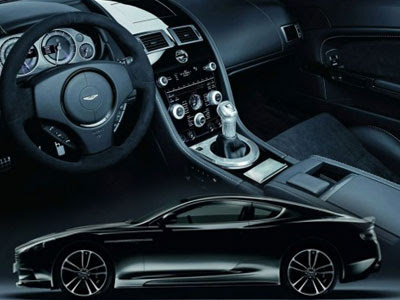
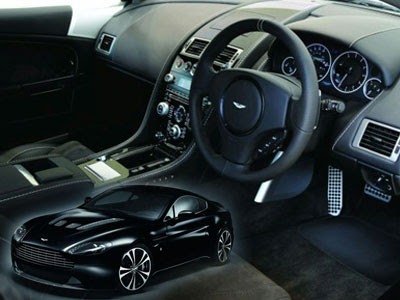
2010 V12 Vantage Carbon Black Aston Martin Sports Car a Special Editions

2010 V12 Vantage Carbon Black Aston Martin Sports Car

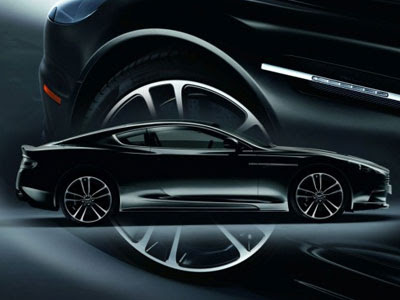
Aston Martin announced the release of two new Aston Martin Carbon Black Special Editions models, the Aston Martin DBS Carbon Black and the Aston Martin V12 Vantage Carbon Black. The Aston Martin V12 Vantage has been one of the marques most desirable models since its introduction in 2009. For 2010 the company is offering a unique 'Carbon Black' special edition version.
2010 V12 Vantage Carbon Black Aston Martin Sports Car

This Carbon Black package is also available for the DBS. The special editions Aston Martin DBS and V12 Vantage Carbon Black will featuring bespoke Carbon Black metallic paint especially formulated with a subtle metallic twist to create a deep rich patina. Each Aston Martin Carbon Black Special Editions will undergo 50 man-hours of hand painting followed by stringent quality checks. For the Aston Martin V12 Vantage side strake has been fashioned from real carbon fibre backed by a black mesh and complimented with gloss black 10 spoke diamond turned alloy wheels. A bright finished grille and front parking sensors complete the exterior detailing.
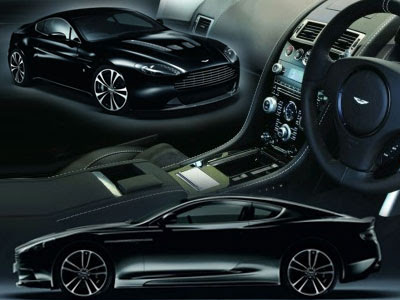
2010 V12 Vantage Carbon Black Aston Martin Sports Car

For the interior, owners will be greeted to swathes of Obsidian Black leather highlighted with a contrast silver coarse. Lightweight seats formed from Carbon Fibre and Kevlar saving 17 kg over the standard seat also feature together with Piano black facia trim, centre stack and centre console, anodised black tread plates and unique sill plaques build on the carbon theme. The Aston Martin 700w Premium Audio System is delivered as standard in the V12 Vantage while the DBS boasts the Bang & Olufsen Beosound DBS audio system as standard.
2010 V12 Vantage Carbon Black Aston Martin Sports Car

Customers who order a Carbon Black Edition V12 Vantage will have the opportunity to experience Aston Martin’s renowned Performance Driving Course (UK and Europe only) free of charge which offers a memorable day helping customers to equip themselves with the skill sets to enhance the enjoyment of their Aston Martin on the track.
2010 V12 Vantage Carbon Black Aston Martin Sports Car

The Carbon Black Editions are available to order from the official Aston Martin dealership network with final pricing (expected to be approximately 5% over current base prices) to be confirmed in the New Year.

Review: 2009 BMW Z4 sDrive30i

2009 BMW Z4 sDrive30i

BMW's storied history of building roadsters dates back to the original 328 of the 1930s. However, there have been gaps in the brand's open-top lineage, including one extended stretch through the '60s, '70s and '80s. After a dalliance with the bizarre European market Z1, BMW finally got serious about roadsters again in the '90s with the introduction of the Z3.

Earlier this year, the Munich brand introduced what's essentially the third generation of its modern mainline roadster (discounting the aforementioned low-volume Z1 and the Z8) in the shape of its all-new Z4. Upon its introduction, the esteemed Mr. Harley took our first crack at the new "E89" at its Southern California launch last spring and came away with mixed feelings.

To be fair, whenever an automaker builds a new model, there's always a distinction between what the engineers and designers expect of it and what consumers bank on. There's also a big difference between spending a few hours on a prescribed driving route under controlled conditions versus living with a car as a daily driver for a week or longer. So we wanted to spend time with the Z4 on more familiar turf to see what life is like with BMW's newest roadster.

Aside from the Z4's new styling, the most notable change from the previous "E85" generation is the adoption of a retractable hard top in place of a fabric roof. In general, we're not big fans of hardtop convertibles due to the additional space they consume when folded – not to mention the additional weight they carry around. The new Z4 is about five inches longer overall than the last generation, and most of that length has been added to the rear end to accommodate the tin top.

Fortunately, the staff at BMW's DesignworksUSA studio have done an admirable job of maintaining the classic long-hood, rear cockpit proportions in this new iteration. In general, this new Z4 is a huge aesthetic improvement over its predecessor. Elaborate surface development was the order of the day the last time around, but to many eyes, the Z3's sheetmetal seemed to go every which way without much coherence. This time around, there's a more clearly defined flow to the Z4's curves and creases, with forms over the fenders and flanks evoking muscles stretched over a skeleton.


Much to our chagrin, Michigan's rainy skies afflicted much of our time with the Z4, meaning that we had to keep the roof up. However, this situation did help demonstrate that hard-hatted convertibles do offer a couple of functional advantages over fabric lids. When driven in the rain, the Z4 remained as tight and dry as any coupe with a permanent roof. The slim C-pillars also meant that apart from the headrest on the passenger seat and the fixed roll hoop immediately behind it, rearward visibility was outstanding.

Raising or lowering the roof proved to be as simple as holding down a switch at the leading edge of the center console for about 20 seconds. From outside the car, the stowing process appears decidedly convoluted as the rear deck opens, the rear window lifts up and all the assorted bits and pieces fold themselves away. The complexity of these tops always give us pause as a long-term ownership consideration, but we've yet to see any evidence of reliability issues with this top, so perhaps it's just our inner Luddites that long for the simple manual Z-fold of, say, a Mazda MX-5 Miata.


Our tester was a base sDrive30i, and as an entry-level model, our Bimmer was devoid of many higher-end toys like satellite navigation, which in turn meant that it had no iDrive controller. As much as the latest iteration of this all-in-one GUI controller has been improved, we were actually quite happy to have a driving environment free of such complexities, as going without seems more in keeping with the spirit of a roadster anyhow. Thankfully, in the iDrive's place there's a set of well arrayed and pleasingly straightforward controls.

Front and center in the console is a pleasantly short lever for rowing through the six-speed manual gearbox. Directly in front of the driver is a small, reassuringly thick-rimmed three-spoke wheel. Thankfully, it's not so small that it obscures the large speedometer and tach that dominate the instrument cluster. As with most modern BMWs, between the analog gauges is a red-orange LCD display that displays secondary information like mileage, radio stations and so on. The readout is easily legible except when wearing polarized sunglasses.


Unfortunately, there are two elements of the interior that strike us as decidedly out of place in a car that costs $50,000. Higher trim levels get a better covering on much of the dash panel, but the aluminum-look piece on our car was actually plastic and it wasn't fooling anyone. In an apparent move to placate drink-happy Americans, BMW also has tacked a cupholder onto the passenger side of the transmission tunnel, which just begs to be snapped off by an errant knee. There are a pair of cupholders under the center armrest, but they're too far back to be easily accessed. Tellingly, European models don't even bother with the forward cupholder and if we had our druthers, we wouldn't either.

Beverage gripes aside, there's plenty of good stuff to talk about – particularly the seats. The Z4 may not be a hardcore sports car, but that doesn't mean it shouldn't have excellent chairs, and here the roadster scores a solid ten. The seats don't have a lot of adjustments, but they don't really need it. The side bolsters are ample and firm enough to hold occupants in place during truly spirited driving, yet comfortable enough for long interstate slogs. Those with a long hip-to-knee span often find the lower cushion of many seats only reach mid-thigh. Fortunately, the upgraded seats that come as part of the Sport package in the Z4 have adjustable thigh supports that allow the seat cushion to be extended out closer to the mid-leg joint.


BMW's (labored) sDrive30i appellation denotes the company's normally aspirated 3.0-liter inline six-cylinder engine. While we're just as enamored with roaring V8s as the next guy, there's something simply sublime about a great straight-six, and it's a BMW hallmark. Unlike a V6 of any bank angle, inline sixes are inherently balanced without having to resort to band-aids like balance shafts. While the two turbos on the sDrive35i do an excellent job of inflating the torque curve, the more moderate 220 pound-feet of our un-boosted sDrive30i arrives at an eminently usable 2,600 rpm. That means cruising around town is a smooth and effortless process that doesn't require drawing excessive attention to one's self by revving out the engine all the time. That is, unless you want to – in which case the six will happily spin up to nearly 7,000 rpm all day long.

In urban traffic or on the freeway, the Z4 is a happy cruiser. With the top up, it's also a remarkably quiet place for a road trip, although you can still can still hear the pleasant engine note coming through. It's not the glorious wail of a high strung race engine, but it does have a mechanical sound that evokes precision machined internals. With the top down and the side glass up, buffeting is surprisingly subdued – even without any sort of wind blocker. For those interested in running the numbers, a normally aspirated Z4 like our tester will scoot to 60 mph in about 5.5 seconds, yet the EPA rates the Z4 at 19 miles per gallon in the city and 28 mpg on the highway regardless of transmission choice. We saw 23 mpg in mixed driving.

If you enjoy listening to something besides the tires thrumming along on the brushed concrete or the air flowing over your head, you may want to consider a serious upgrade to the stereo system. The base entertainment system simply does not have the auditory oomph required to overcome high speed air flow. Even maxed out, the volume was totally inadequate at 70+ mph.


We had an all-too-brief opportunity to sample another Z4 in the vicinity of California's celebrated Mulholland Highway earlier this year, and while our man Harley was right that the Z4 ultimately lacks the knife-edged feel of at least one of its primary competitors, this is still a car with a a very well-balanced chassis. As it approaches its cornering limits, the rear axle will smoothly drift out at least to the limit of what the stability control system will allow. And when the Bimmer's electronic overlords do intrude on the fun, they do so in a very smooth and progressive fashion. Rather than jerking the car back into line, the system simply holds the car at its the maximum allowable slip angle. As the time for directional changes approaches, the steering allows the driver to make adjustments with precision while feeding back information about how close the tires are to their limits.

Back here in the decidedly less glamorous environs of southeast Michigan, the opportunities for that sort of vehicular merriment tend to be more limited. Most of the roads are of the straight and flat variety, and they're often poorly maintained. The patchwork of random materials that make up many of the surfaces may not be good fun for fans of winding roads, but they do provide an ideal over-the-road laboratory for assessing structural rigidity, and they routinely have windshield frames quivering madly. All due credit, then, to BMW engineers, who have managed to create one of the most solid-feeling convertible structures we've ever experienced – the A-pillars exhibited no movement relative to the rest of the body.


Like all hardtop convertibles, the Z4's roof eats up a significant portion of the trunk space when retracted, and what's left is only accessible through a narrow slot. With the top up, the trunk is rated at eight cubic feet and with the roof stowed, the available space shrinks to just five or six cubic feet. Couples planning a road trip are advised to pack very lightly or run with the top up until they get to their destination.

Admittedly, BMW's latest is probably not the best track day companion, but after spending a week with the Z4, it's clear that BMW never intended it to be. Instead, this is a roadster that excels in the everyday world, yet is still one whose limits can be safely explored without fear that it will reach out and bite. Between its friendly power delivery, robust structure and snug-fitting hard-top, the E89 is a legitimate daily driver for virtually any region in the country. Even mounted with proper snow tires it would make a reasonable case for itself in the winter. So while the Z4 may not provide the last word for the weekend brain-bucket and Nomex set, for the average enthusiast it's a genuine pleasure and a worthy addition to BMW's roadster canon.


[Source: Autoblog]

2011 Ford Mustang GT and 5.0-liter V8 unwrapped early

2011 Ford Mustang G

Thanks to some embargo breaking that's already occurred, we've known for a week that the 2011 Ford Mustang GT would pack a brand new 5.0-liter V8 producing 412 horsepower and 390 pound-feet of torque. We thought those tidbits might hold over the internet 'till the official embargo date lifts early next week, but we were wrong and therefore are still awake at 1:30 AM on Christmas morning writing this post. Thanks to Jalopnik via MustangHeaven via BurlappCars, we have the first images of the 2011 Mustang GT and its new 5.0-liter V8.

You can read more about some of the engine's details that have already leaked here, but let's just take a look see at what we've got. Kudos to Ford for leaving the engine's tippy top unadorned and we also dig those 5.0 badges on the engine and fenders. Nostalgia FTW – OMG! An old fat guy with a sack of stuff just crawled out of my fire place! I think he's a burglar. Gotta go hide the silver

[Source: BurlappCars via MustangHeaven via Jalopnik]

Thursday, December 24, 2009

2011 BMW 5-Series F10 Sports Concept plans by Lumma Design, TopCar, and Cardi that have joined forces to offer a new Sport package

2011 BMW 5-Series F10 Sports Concept plans
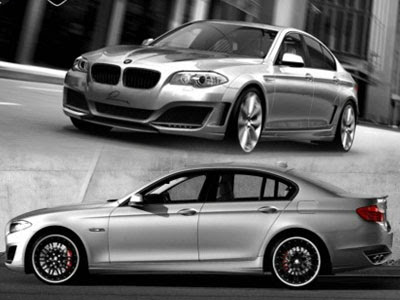
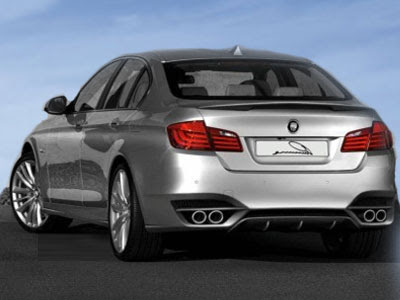
Two Russian tuning firms and a German company have teamed up to offer a new kit for the 2011 BMW 5-Series F10. TopCar and Cardi, from Russia, and Lumma Design have joined forces to create an aggressive styling package which will likely boost performance.
The brand-new 2011 BMW 5-Series hasn't even made its motor show debut yet, but tuners are already actively working on their plans to present an array of performance and cosmetic goodies for the Bavarian automaker's premium sedan.
2011 BMW 5-Series F10 Sports Concept plans
German and Russian tuning houses are joining efforts to create bodykit and tuning packages for the F10 5-series. Full set of renderings inside. One of the first proposalscomes from a trio of companies, Russia's TopCar and Cardi, and Germany's Lumma Design, that have joined forces to offer a new sport package for the Bimmer.
2011 BMW 5-Series F10 Sports Concept plans
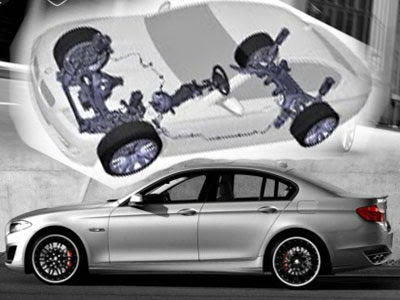
TopCar and Cardi are the russian tuners and Lumma Design is the german tuner. Judging by the included renderings, the car will maintain a bulging nose, with new carbon fiber front lip installed underneath. Their renderings show an aggressive front end package including a new front bumper aggressively sculpted with huge air inlets, carbon fiber front lip, LED lighting and honeycomb grill. TopCar and Cardi will handle the design aspect of the project while Lumma Design will be responsible for the manufacturing of the kit as well as the performance upgrades. One version of the kit also features super wide wheel fenders and aggressive side skirts. The rear features a carbon fiber rear trunk spoiler, together with carbon fiber rear diffuser, quad exhaust pipes. Two types of wheel options will be available.
2011 BMW 5-Series F10 Sports Concept plans
Although the three tuners have not disclosed any specific details about the package, they did release a set of photoshoped images that show a new wide bodykit trimmed in carbon fiber that consists of new bumpers, fender extensions, side skirts and a boot lid spoiler.2011 BMW 5-Series F10 Sports Concept plans
In addition, the tuners previewed three different alloy wheel designs for the 2011 5-Series.
This custom F10 5-series is expected to debut in April 2010, along with details of the full performance tuning package.

Wednesday, December 23, 2009

2010 BMW ActiveE Concept Car Powered By A New Synchronous Electric Motor Specially Developed For This Vehicle

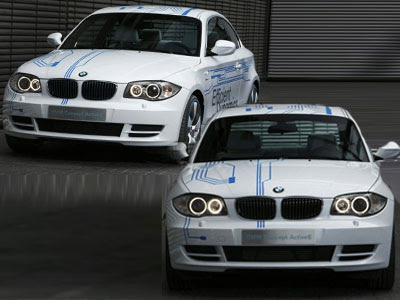
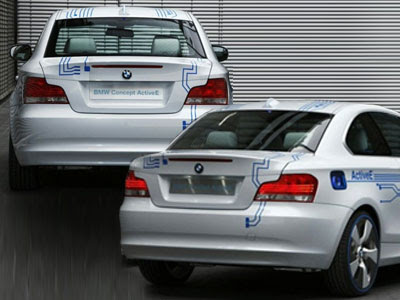
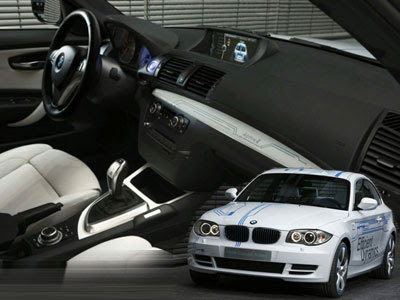
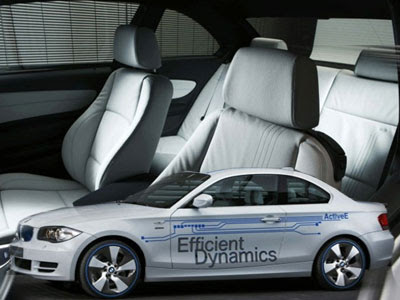
2010 BMW ActiveE Concept Car

Introducing the BMW ActiveE Concept, the latest electric vehicle project under BMW Group's initiative to produce vehicles that explore solutions to minimize environmental impacts while preserving the kinetic driving experience for which BMW has long been known. The BMW ActiveE Concept follows the all-electric MINI E as the second large-scale electric vehicle test program to be conducted in the hands of interested customers.
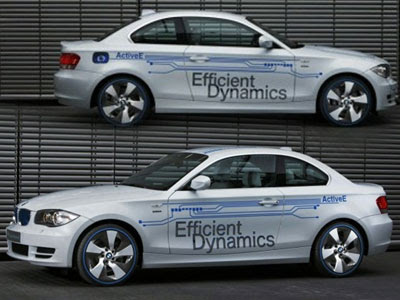
The BMW Concept ActiveE is based on the BMW 1 Series Coupe. The BMW Concept ActiveE is powered by a new synchronous electric motor specially developed for this vehicle. Its maximum output is 125 kW/170 bhp, the maximum torque of 250 Nm / 184 lb-ft is available from standing as is typical for electric motors and remains available over an unusually broad load range.
2010 BMW ActiveE Concept Car

Predicted driving performance figures: acceleration from zero to 60 km/h (37mph) in less than 4.5 seconds and from zero to 100 km/h (62mph) in less than 9 seconds, maximum speed: approx. 145 km/h (90 mph, electronically limited). As with the MINI E, the real-world range is expected to be about 160 km / 100 miles on a single charge, depending on conditions (FTP72 cycle range is calculated to be 240 km / 150 miles in simulation).
2010 BMW ActiveE Concept Car

The electric drive system draws its energy from new, advanced lithium-ion battery pack developed jointly by BMW and the co-operation partner SB LiMotive especially for the BMW ActiveE Concept. They enable a range of approx. 160 kilometres (100 miles) in everyday use. An intelligent battery management system helps achieve this range largely independently of external climatic conditions. Additionally, the charging period required for the lithium-ion batteries is very short. On the European power grid, the battery pack can be fully charged in just 3 hours at a wall box with a current of 50 ampere at 230/240 volts. In North America, using a high-current (32 ampere continuous) residential wall box, the charge time is about 4.5 hours.
2010 BMW ActiveE Concept Car

There is a clearly recognizable differentiation from the serial production model of the BMW 1 Series Coupe with the body finish in Liquid White metallic, as well as graphic elements derived from printed circuits in Electric Blue on the hood, doors, roof and trunk lid, as well as the lettering “ActiveE”, “eDrive” and “EfficientDynamics” on the doors and side panels. Specific light-alloy wheel wheels, the lack of an exhaust system and blue illuminated elements such as the roof fin and charging connection highlight the special character of this electrically powered concept vehicle.
2010 BMW ActiveE Concept Car

In the BMW ActiveE Concept, new BMW ConnectedDrive services are presented which have been designed exclusively for use in an electric vehicle. This includes specific remote functions which enable the use of a mobile phone to check the charge status of the battery, search for public charging stations and activate the vehicle’s auxiliary heating and air conditioning functions. The BMW ActiveE Concept creates a basis for the expansion and intensification of this field testing on electro-mobility, oriented towards enabling large-scale production in the future. The aim is to produce a fleet to a scale which will exceed that of the MINI E. The BMW ActiveE Concept moves a little closer towards the future of an individual mobility which will combine driving pleasure with CO2-free travel.

Tuesday, December 22, 2009

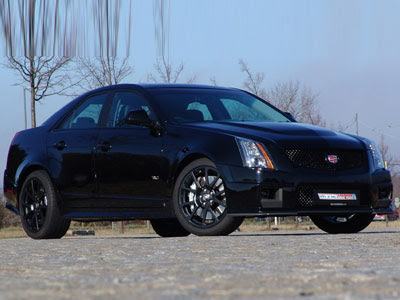
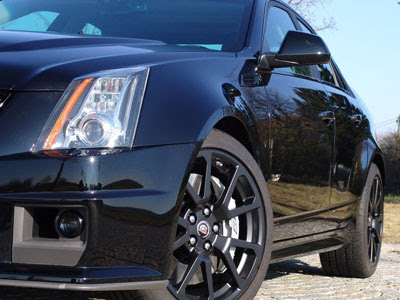
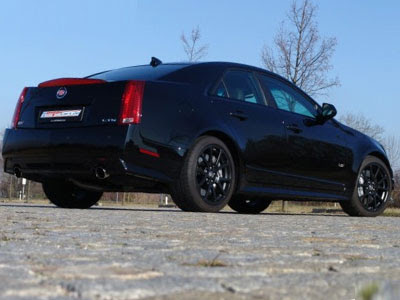
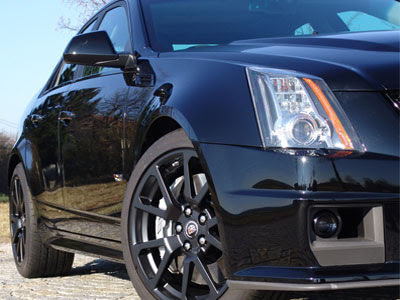
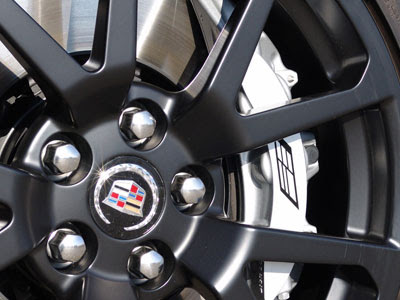
2010 The GeigerCars Cadillac CTS-V Brute Force Powered By A Supercharged 6.2 liters V8 Engine

2010 The GeigerCars Cadillac CTS-V Brute Force

GeigerCars.de, a German tuner specialized in North American cars, has launched an upgrade program for the Cadillac CTS-V. Despite its German location, Geiger Cars shows a great passion for tuning American cars. Instead of getting even more power and torque out of neighbouring brands like the Audi RS 6, the BMW M5, or the Mercedes-Benz E 63, Geiger chose to cross the Atlantic and create a monster out of a beast.
2010 The GeigerCars Cadillac CTS-V Brute Force

The performance saloon segment has for years been the exclusive domain of German manufacturers, for vehicles like the Audi RS6, the BMW M5 or the new Mercedes E63 AMG set the bar so high that most others don't even try to compete. So it's all the more surprising that the American Cadillac of all brands has suddenly hit back with the CTS-V, a lighting ride which has left a good many journalists pale-faced and shaken after test drives. 564 series HP and a massive maximum torque of 747 Nm are a clear challenge to Munich, Ingolstadt and Stuttgart.
2010 The GeigerCars Cadillac CTS-V Brute Force

What is more, Cadillac is now marketing the CTS-V in Europe for 74,400.00 euros - which needless to say leaves its German competitors trailing on the price-performance front.
Tradition, as everyone knows, is an obligation to deliver. That is why GeigerCars.de is offering special performance tuning for the Cadillac CTS-V, timed to coincide with the American performance saloon's European launch.
2010 The GeigerCars Cadillac CTS-V Brute Force

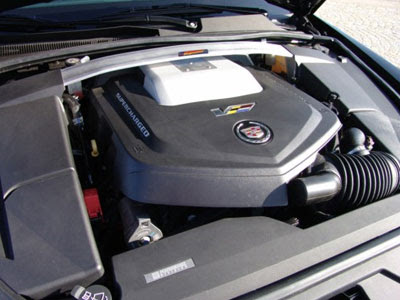
The four-door Cadillac with the tapered bonnet, The Cadillac CTS-V already comes packed to the hilt with a supercharged 6.2-litre LSA V8 based on the LS9 V8 from the Corvette ZR1. In its raw form it makes 415kW (564hp) at 5900rpm and 747Nm of torque. Not content, Geiger engineers upped the charge pressure releasing 455kW (619hp) and 850Nm of torque - a level few sports cars can match, and called it Brute Force. Drive is still thrusted upon the 6-speed gearbox and the rear wheels, although fifth and sixth gears are shortened. Top speed is rated at over 330km/h (205mph).
2010 The GeigerCars Cadillac CTS-V Brute Force

One thing is for sure: the Geiger Cadillac CTS-V shoots into action in all situations and keeps a joyful grin on its driver's face in every one of its manual gears. Not only that, but its optimised chassis means the CTS-V offers the perfect balance between long-distance comfort and an uncompromising hunger for curves and speed. In the face of such American sports perfection, we can only say "hats off"!". Geiger gives assurances that the car is a good compromise between a long-distance cruiser and a sharp, agile cornering machine. It can be had for €84,900, just €10,500 more than what Cadillac charges for the standard vehicle in Europe
2010 The GeigerCars Cadillac CTS-V Brute Force

Technical data, Geiger Cadillac CTS-V :
Engine: 6.2 liters V8 with compressor, increased charge pressure
Power: 619 HP at 5900 rpm
Max. torque: 850 Nm at 4000 rpm Bore x stroke: 103.2 x 92.0mm
Drive: rear-wheel drive
Gears: 6-gear transmission; 5th and 6th gear shortened
Brakes: ventilated disc brakes at front and rear
Top speed: 330km/h
Price: 84,900.00 euros

2010 MR Audi S3 Black Performance Edition

the Audi S3 Black Achievement Edition by MR Car Design

comes with date III achievement kit includes new agent electronics and an upgraded bankrupt arrangement that assignment calm accession the achievement to 337 hp and 450Nm of torque. The MR Car Design Audi S3 Black Achievement Edition comes with a downpipe including sports cat, sports bankrupt arrangement with optimized activating burden and a new intercooler.2010 MR  Audi S3 Black Performance Edition
2010 MR  Audi S3 Black Performance Edition

Monday, December 21, 2009

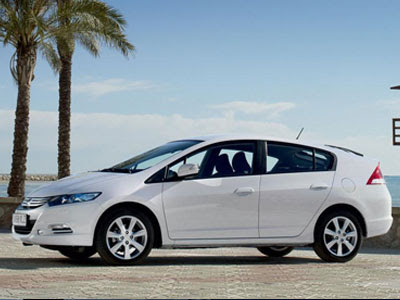
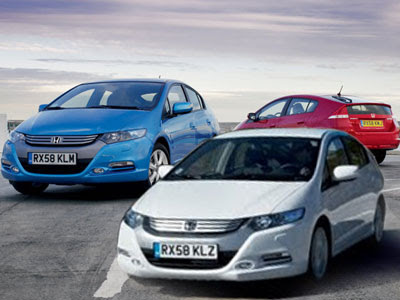
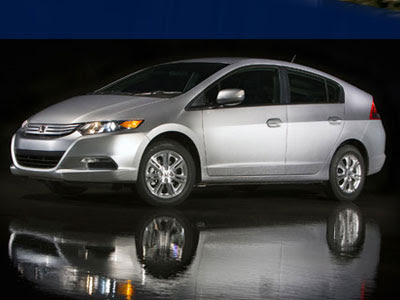
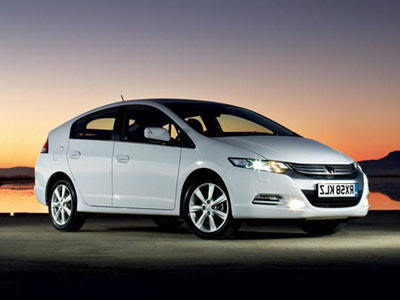
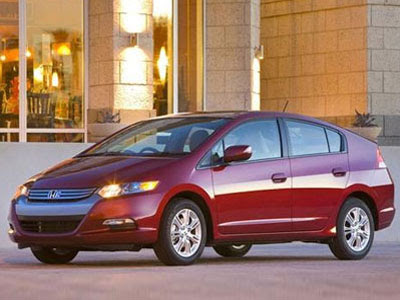
2010 Honda Insight EU Version Called 'Aero Athlete' Concept

2010 Honda Insight EU Version

Although the Honda Insight design team started with a blank piece of paper - in that this was a brand new model with no history - they faced many challenges in creating the exterior appearance of the Honda Insight.
On the one hand, as a low emission hybrid car, it had to express environmental credentials - it had to look like a 'green' car - but on the other hand it had to appear dynamic and fun to drive; part of Honda's key design principles. Above all, in line with the positioning of Honda Insight, the design had to appeal to a broad range of people.
2010 Honda Insight EU Version

While the 'greenness' of the car may have challenged the sporty direction of the overall design, in some areas it actually helped the dynamic cause. Because the newly-developed IMA system is more compact, it meant the nose of the car could be shorter, creating a snubbed, more aggressive look to the front end.
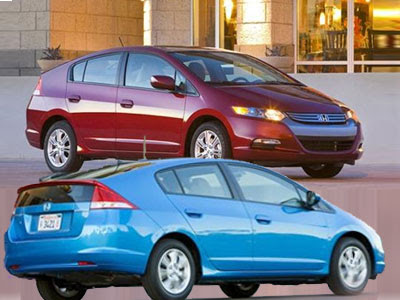
Another important factor that led (and to some extent restricted) the exterior design was the bodystyle itself. To appeal to as many people as possible, a 5-door layout was chosen, and this brought its own challenges, particularly when optimising the aerodynamics of the car, and creating enough headroom for passengers in the rear.
2010 Honda Insight EU Version

The Insight adopts slim, projector-style headlights in a 4-light cluster. The headlight's low beam has blue detailing, and the indicators are located in the lower bumper face.
Firstly, the line from the centre of the roof to the top of the boot lid is at the optimum angle for controlling the flow of air off the top of the car, with minimum turbulence. Also, you'll notice that the top half of the body tapers in towards the rear of the car, which also helps the air flow travel smoothly over the car. Stable air flow over this section helps the car pass through the air with minimal drag.
2010 Honda Insight EU Version

"The concept for the main shape of the car is called 'Aero Athlete'," says Mr Minowa. "It reflects a sporty, lean body with no fat, the tension of muscles and nothing unnecessary added." The Honda Insight is fitted with a seven-spoke alloy design, to enhance the sporty image of the car.
All Honda Insight grades are equipped with Honda's Vehicle Stability Assist (VSA) system, designed to assist the driver in maintaining control during cornering, acceleration and sudden manoeuvres by applying braking to the right or left hand wheels as necessary and managing the engine torque systems.
2010 Honda Insight EU Version

Honda's IMA hybrid system concept is now 10 years old - having made its debut in the original Insight back in 1999. IMA stands for Integrated Motor Assist, which consists of a low-friction 1.3 litre engine that serves as the primary power source, an ultra thin electric motor, a lightweight and compact battery with a continuously variable transmission.
This system has been used successfully in not only the Honda Insight, but also the Civic IMA, and its successor, the Civic Hybrid. Over the years the system has evolved and become smaller, more lightweight and less expensive to produce, and the latest version in the new Honda Insight is the most advanced IMA technology introduced by Honda to date. The fifth generation IMA system in the Insight is 24% more compact than the fourth generation system freeing up space for luggage.
2010 Honda Insight EU Version

The engine itself is new, but is based heavily on the 1.3-litre from the Civic Hybrid. This modified i-VTEC unit from the Civic Hybrid has been further enhanced with lessons learned from the Jazz incorporated to improve fuel economy. The low friction, pattern coated piston design has been combined with a new catalyst design to further optimise this already highly efficient power unit. These measures along with a further stabilised combustion process give a fuel economy improvement for the engine alone of 2% on what is already a highly-efficient unit.
2010 Honda Insight EU Version

When combined, the motor and engine produce lively performance ideal for urban environments, with good throttle response and acceleration times to rival conventional 1.6-litre petrol cars with automatic gearboxes. The Honda Insight reaches 100 km/h from a standing start in 12.6 seconds, and goes on to a top speed of 186 km/h.
2010 Honda Insight EU Version

Using a CVT transmission in a hybrid provides smooth and predictable gear transitions and helps keep the IMA system operating in its most efficient range. In the Insight, an evolution of the high-torque CVT unit from the Honda Civic Hybrid is used.
This version of CVT has a lower final drive gear ratio (4.200 from 3.937), which results in faster-acting initial acceleration performance.